Pierce County Dog Registration Information
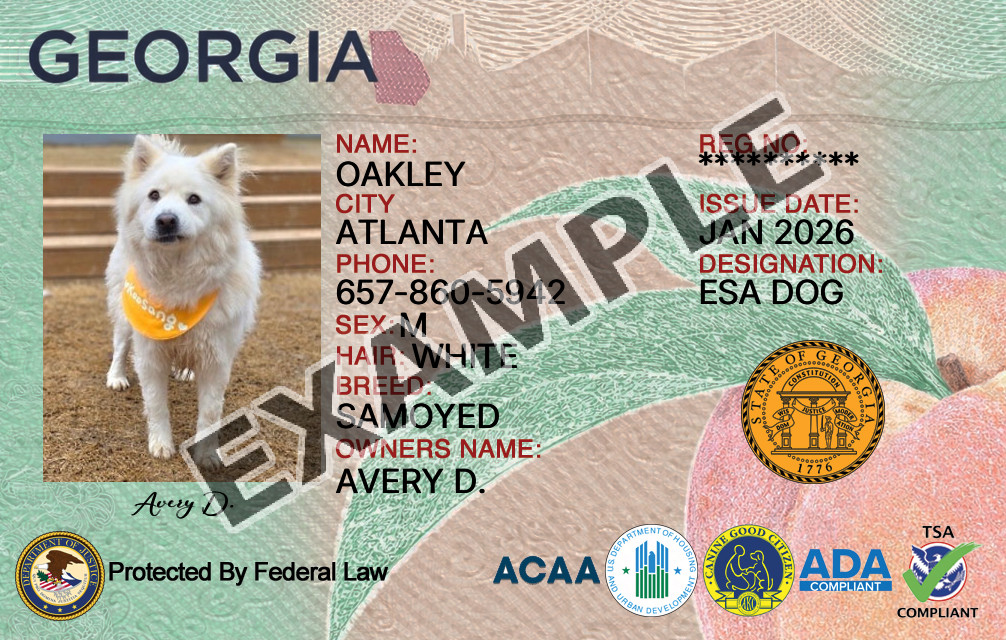
Service Dogs and Emotional Support Animals in Pierce, Georgia
If you’re searching “where do I register my dog in Pierce County, Georgia for my service dog or emotional support dog,” it helps to know that there are two separate ideas that often get mixed together: (1) local dog licensing/animal control rules and (2) the legal definitions for service dogs and emotional support animals (ESAs). In Pierce County, dog licensing (when required) is handled locally through government offices—not through a single nationwide registry—and service dog or ESA status is not created by a universal federal “registration.”
Where to Register or License Your Dog in Pierce County, Georgia
The offices below are official government contacts that serve Pierce County, Georgia residents for animal control-related needs. If you are specifically trying to confirm whether a dog licensing requirement applies at your address (county vs. inside city limits), call first and ask what applies to your location and your dog’s situation (pet, service dog, or emotional support animal).
Office of the Sheriff – Pierce County, GA
Blackshear, GA 31516
Use this office to ask where animal control services are coordinated for your area of Pierce County and to confirm what local registration or licensing steps (if any) apply where you live.
Pierce County Emergency Management Agency (EMA) – County Contact Listing
This county listing provides a verified local government contact number and hours. While not an animal services office, it can be a helpful official directory contact if you need to be routed to the correct county department for animal control or dog licensing questions.
Overview of Dog Licensing in Pierce County, Georgia
What “dog registration” usually means locally
In everyday language, “registering a dog” in Pierce County, Georgia typically refers to one (or more) of these local actions:
- Getting a dog license (if required by the county or your city)
- Ensuring your dog meets rabies vaccination requirements and keeping proof available
- Confirming compliance with local ordinances (leash rules, at-large rules, nuisance rules)
- Updating contact information if your dog is impounded or you’ve had prior animal control contact
Do service dogs or ESAs have a special county “registry”?
Typically, no. A local dog license (when applicable) is about rabies/public safety and identification, not about disability status. A service dog is defined by training and work/tasks related to a disability. An emotional support animal is generally recognized in specific contexts (most commonly certain housing situations) based on documentation, not a universal government database.
What You Need Before Registering a Dog
Common documents and details to gather
Before you contact animal services or apply for a dog license in Pierce County, Georgia, it helps to have these items ready. Requirements can vary by city versus unincorporated areas, but the following are common:
- Proof of current rabies vaccination (rabies certificate from your veterinarian)
- Your ID and basic contact information
- Proof of residency (especially if fees differ for residents)
- Your dog’s description: name, breed/mix, color, approximate age, sex
- Spay/neuter documentation (if local fees or requirements differ)
If you have a service dog or emotional support animal
For local licensing, the same health and vaccination documentation may apply as for any dog. For service dog/ESA-related questions, be prepared to describe the category correctly: service dog (trained tasks for a disability) vs. ESA (support that may be relevant for housing). Local licensing offices generally focus on vaccination and ordinance compliance rather than disability documentation.
Steps to Register or License a Dog in Pierce County, Georgia
Step 1: Confirm who handles licensing for your address
Start by confirming whether your address is in:
- Unincorporated Pierce County (county rules and enforcement), or
- Inside a municipality (city rules and enforcement may apply)
Call the official office listed above and ask: “Who handles animal control and dog licensing for my address?” This is the quickest way to avoid being bounced between departments.
Step 2: Ask what the county/city requires for a dog license
When you speak with the office, ask these questions so you understand the dog licensing requirements in Pierce County, Georgia (or your city):
- Is a dog license required for residents? Is it annual or lifetime?
- Is a rabies certificate required at the time of licensing?
- Are there different fees for spayed/neutered dogs?
- Are there special rules for dogs kept primarily indoors, working dogs, or dogs in training?
- What is the process to update ownership/address information?
Step 3: Complete the license process and keep your proof
If licensing applies, follow the office’s instructions for submitting documents and paying any required fee. Keep a copy of your dog’s rabies certificate and any license information where you can access it quickly (for example, if an animal control officer requests proof after a complaint, bite report, or at-large incident).
Service Dog Laws in Pierce County, Georgia
Service dogs vs. local “registration”
A service dog’s legal status is primarily based on what the dog is trained to do for a person with a disability. That is separate from a local dog license in Pierce County, Georgia. Even if your dog is a service dog, local public health and safety rules may still require:
- Compliance with rabies vaccination requirements
- Following local leash/at-large rules (unless a disability-related exception applies in a specific circumstance)
- Following nuisance and safety ordinances
What businesses/organizations typically can and cannot ask
In most public-access situations, a service dog is not “certified” by a single federal registry. When questions are allowed, the focus is generally on whether the dog is required because of a disability and what work/tasks the dog is trained to perform. A local dog licensing office may not be the right place for public-access disputes; their role is typically animal control, vaccination compliance, and local ordinance enforcement.
Emotional Support Animal Rules in Pierce County, Georgia
ESAs are different from service dogs
An emotional support animal (ESA) provides comfort or support that may be helpful for a person’s health condition, but ESAs are not the same as service dogs for public access. In many cases, ESA status comes up most often in housing contexts (for example, requesting a reasonable accommodation). That’s separate from the question of where to register a dog in Pierce County, Georgia for licensing.
Do ESAs need a Pierce County dog license?
If your city or the county requires a dog license, that requirement generally applies to dogs regardless of whether they are pets, emotional support animals, or service animals—because licensing is usually tied to vaccination and identification rather than disability-related status. The best approach is to contact the official office listed above and confirm the exact requirement for your address.
Dog License vs. Service Dog vs. Emotional Support Animal (ESA)
| Category | What it is | Who handles it (typically) | Common proof or documentation |
|---|---|---|---|
| Dog license | A local permit/record (when required) that helps show a dog meets local rules, often tied to rabies vaccination and identification. | Local government (county/city animal control, sheriff’s office, or another designated local office). | Rabies vaccination certificate; owner ID/residency; sometimes spay/neuter documentation; fee payment (varies). |
| Service dog | A dog trained to do specific work or tasks for a person with a disability (for example, guiding, alerting, retrieving, interrupting harmful behaviors). | Not created by a single federal registry; status is based on training and disability-related need. Local licensing may still apply for health/safety. | Typically no universal “registration.” In many settings, the key is the dog’s trained tasks. Vaccination and local ordinance compliance may still be required. |
| Emotional support animal (ESA) | An animal that provides emotional support/comfort that may help with a health condition; not the same as a task-trained service dog. | Usually relevant in housing contexts as an accommodation issue; local licensing (if required) is separate. | Documentation may be required in certain housing situations. No universal federal government ESA registry; vaccination and local ordinances may still apply. |
Frequently Asked Questions
What You May Need
Local terms you may hear
- Dog license: local permit/record (when required)
- Rabies certificate: proof of vaccination from a veterinarian
- Animal control: enforcement of animal ordinances and response to complaints
- Service dog: trained tasks for a disability
- ESA: support animal, often discussed in housing contexts
Register A Dog In Other Georgia Counties
Select your county below to get started with your dog’s ID card. Requirements and license designs may vary by county, so choose your location to see the correct options and complete your pup’s registration.
- Appling Dog License Cards
- Atkinson Dog License Cards
- Bacon Dog License Cards
- Baker Dog License Cards
- Baldwin Dog License Cards
- Banks Dog License Cards
- Barrow Dog License Cards
- Bartow Dog License Cards
- Ben Hill Dog License Cards
- Berrien Dog License Cards
- Bibb Dog License Cards
- Bleckley Dog License Cards
- Brantley Dog License Cards
- Brooks Dog License Cards
- Bryan Dog License Cards
- Bulloch Dog License Cards
- Burke Dog License Cards
- Butts Dog License Cards
- Calhoun Dog License Cards
- Camden Dog License Cards
- Candler Dog License Cards
- Carroll Dog License Cards
- Catoosa Dog License Cards
- Charlton Dog License Cards
- Chatham Dog License Cards
- Chattahoochee Dog License Cards
- Chattooga Dog License Cards
- Cherokee Dog License Cards
- City of Athens Dog License Cards
- City of Augusta Dog License Cards
- City of Columbus Dog License Cards
- City of Cusseta Dog License Cards
- City of Georgetown Dog License Cards
- City of Macon Dog License Cards
- City of Preston Dog License Cards
- City of Statenville Dog License Cards
- Clarke Dog License Cards
- Clay Dog License Cards
- Clayton Dog License Cards
- Clinch Dog License Cards
- Cobb Dog License Cards
- Coffee Dog License Cards
- Colquitt Dog License Cards
- Columbia Dog License Cards
- Cook Dog License Cards
- Coweta Dog License Cards
- Crawford Dog License Cards
- Crisp Dog License Cards
- Dade Dog License Cards
- Dawson Dog License Cards
- Decatur Dog License Cards
- DeKalb Dog License Cards
- Dodge Dog License Cards
- Dooly Dog License Cards
- Dougherty Dog License Cards
- Douglas Dog License Cards
- Early Dog License Cards
- Echols Dog License Cards
- Effingham Dog License Cards
- Elbert Dog License Cards
- Emanuel Dog License Cards
- Evans Dog License Cards
- Fannin Dog License Cards
- Fayette Dog License Cards
- Floyd Dog License Cards
- Forsyth Dog License Cards
- Franklin Dog License Cards
- Fulton Dog License Cards
- Gilmer Dog License Cards
- Glascock Dog License Cards
- Glynn Dog License Cards
- Gordon Dog License Cards
- Grady Dog License Cards
- Greene Dog License Cards
- Gwinnett Dog License Cards
- Habersham Dog License Cards
- Hall Dog License Cards
- Hancock Dog License Cards
- Haralson Dog License Cards
- Harris Dog License Cards
- Hart Dog License Cards
- Heard Dog License Cards
- Henry Dog License Cards
- Houston Dog License Cards
- Irwin Dog License Cards
- Jackson Dog License Cards
- Jasper Dog License Cards
- Jeff Davis Dog License Cards
- Jefferson Dog License Cards
- Jenkins Dog License Cards
- Johnson Dog License Cards
- Jones Dog License Cards
- Lamar Dog License Cards
- Lanier Dog License Cards
- Laurens Dog License Cards
- Lee Dog License Cards
- Liberty Dog License Cards
- Lincoln Dog License Cards
- Long Dog License Cards
- Lowndes Dog License Cards
- Lumpkin Dog License Cards
- Macon Dog License Cards
- Madison Dog License Cards
- Marion Dog License Cards
- McDuffie Dog License Cards
- McIntosh Dog License Cards
- Meriwether Dog License Cards
- Miller Dog License Cards
- Mitchell Dog License Cards
- Monroe Dog License Cards
- Montgomery Dog License Cards
- Morgan Dog License Cards
- Murray Dog License Cards
- Muscogee Dog License Cards
- Newton Dog License Cards
- Oconew Dog License Cards
- Oglethorpe Dog License Cards
- Paulding Dog License Cards
- Peach Dog License Cards
- Pickens Dog License Cards
- Pike Dog License Cards
- Polk Dog License Cards
- Pulaski Dog License Cards
- Putnan Dog License Cards
- Quitman Dog License Cards
- Rabun Dog License Cards
- Randolph Dog License Cards
- Richmond Dog License Cards
- Rockdale Dog License Cards
- Schley Dog License Cards
- Screven Dog License Cards
- Seminole Dog License Cards
- Spalding Dog License Cards
- Stephens Dog License Cards
- Stewart Dog License Cards
- Sumter Dog License Cards
- Talbot Dog License Cards
- Taliaferro Dog License Cards
- Tattnall Dog License Cards
- Taylor Dog License Cards
- Telfair Dog License Cards
- Terrell Dog License Cards
- Thomas Dog License Cards
- Tift Dog License Cards
- Toombs Dog License Cards
- Towns Dog License Cards
- Treutlen Dog License Cards
- Troup Dog License Cards
- Turner Dog License Cards
- Twiggs Dog License Cards
- Union Dog License Cards
- Upson Dog License Cards
- Walker Dog License Cards
- Walton Dog License Cards
- Ware Dog License Cards
- Warren Dog License Cards
- Washington Dog License Cards
- Wayne Dog License Cards
- Webster Dog License Cards
- Wheeler Dog License Cards
- White Dog License Cards
- Whitfield Dog License Cards
- Wilcox Dog License Cards
- Wilkes Dog License Cards
- Wilkinson Dog License Cards
- Worth Dog License Cards
